Hospitals never really stop. What with patients arriving throughout the day and clinical teams moving between wards, essential areas need to remain accessible around the clock. In this high-demand environment, it makes hospital cleaning quite different from other types of commercial cleaning service that can be undertaken once everyone has gone home. Effective professional hospital cleaning must work around a live healthcare environment and maintain consistently high standards of hygiene and safety.
One of the biggest challenges cleaning companies face is access; a hospital cleaner cannot necessarily close and entire corridor, ward or waiting areas as work takes place. Cleaning schedules therefore need to account for the movements of patients as well as visiting hours and clinical activities.
Teams should also consider the immediate hazards their work could create: a recently cleaned floor will need appropriate signage and careful management, so it doesn’t become a slip risk in an area used by hospital occupants. NHS England’s National Standards of Healthcare Cleanliness recognise that cleaning requirements should be based on the activities taking place within the area and its associated level of infection risk. Also highlighted is the importance of appropriate cleaning frequencies as opposed to assuming every part of a healthcare facility can follow the same routine (which is why companies like JCD Cleaning will survey a property and devise a plan for each area before starting a job).
The potential hazards involved in medical facility cleaning are numerous, as cleaning personnel may encounter blood or the spillage of bodily fluids, contaminated waste and surfaces that are frequently touched by large numbers of people. Cross-contamination should be carefully controlled, as NHS infection prevention guidance requires standard infection control precautions to be applied across care settings, including the safe management of the environment, linen, spillages, and waste.
The cleaning chemicals used are equally important and products need to be selected correctly, with cleaning teams working in accordance with relevant COSHH assessments.
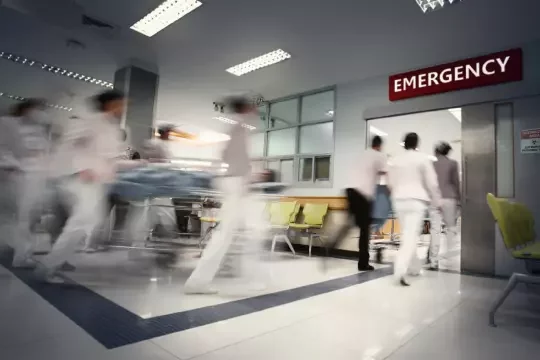
What separates general cleaners from specialists providing commercial cleaning services for hospitals is their understanding of the environment around them. An expert team should know about infection control procedures and how to execute their designated cleaning responsibilities and how to complete them in sequence. Adaptability is also crucial in an ever-changing space like a hospital.
Good communication is particularly important where cleaning teams may need to coordinate with hospital staff before entering sensitive areas or respond quickly when an unexpected spillage requires attention, as an example.
JDC’s provision is designed around the demands of busy healthcare environments, so rather than applying a generic routine to our cleaning services for hospitals, we can instead structure our team and plan around the individual facility and how its different spaces are used throughout the day. Teams can’t depend on finding a quiet moment to clean in 24/7 environments, as they’ll never find one. Careful scheduling is required to execute a cleaning programme capable of working alongside the people delivering essential healthcare services. With the right approach, hospitals can maintain high standards of cleanliness and remain fully operational for those who depend on them.
